Xin Nian Kuai Le
The Chinese New Year "Yuan Tan" takes place between January 21 and February 20. The exact date is fixed by the lunar calendar, in which a new moon marks the beginning of each new month.
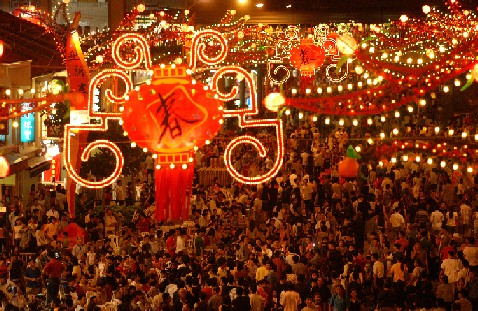
For many families, it is a time for feasting, visiting relatives and friends, but in the city a spectacular procession takes place. The celebrations are based on bringing luck, health, happiness, and wealth till the next year. They clean their houses to rid them of lasts year's bad luck before the celebrations begin.
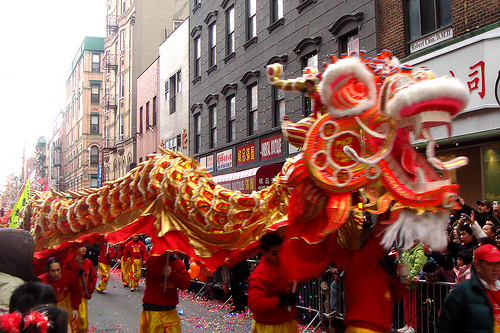
There are street parades where thousands of people line the streets to watch the procession of floats in the New Year parade. Dancing dragons and lions weave their way through the crowded streets. The dragon is associated with longevity and wealth. Inside the costumes are 50 dancers, twisting and turning the dragon's long silk body and blinking eyes.
Chinese people believe that evil spirits dislike loud noises so they decorate their houses with plastic firecrackers. The loud noises are intended to frighten away evil spirits and bad luck that the spirits might bring.
They also go to the markets to buy plants and flowers that will bring them good luck for the New Year. The Kumquat tree is considered to be the luckiest because its name is a play on the word lucky.
For more information click on the links below
http://education2.uvic.ca/Faculty/mroth/438/CHINA/chinese_new_year.html
http://chinese-new-year.123holiday.net/index.html- history of the new year
http://education2.uvic.ca/Faculty/mroth/438/CHINA/taboos.html- taboos of the new year
http://www.factmonster.com/spot/chinesenewyear1.html
http://www.activityvillage.co.uk/chinese_new_year.htm
http://www.enchantedlearning.com/crafts/chinesenewyear/
http://www.k-international.com/blog/8-fun-facts-about-the-chinese-new-year/
http://www.china-family-adventure.com/chinese-new-year.html
THE LINKS BELOW WILL FURTHER HELP YOU WITH FINDING INFORMATION FOR YOUR BOOK
MY RESEARCH PIN BOARD-Immigration Statistics